Captain Srinivasa Murthy Central Ayurveda Research Institute (CSMCARI), Chennai is a prominent institution under the Central Council for Research in Ayurvedic Sciences (CCRAS), Ministry of Ayush, Government of India. It is dedicated to advancing research in Ayurveda and promoting indigenous systems of medicine.
The institute was named after Captain Dr. G. Srinivasa Murthy, a legendary figure in Indian medicine. His disciple, Dr. V. Narayana Swamy, founded the institute, initially named as Captain Srinivasa Murthy Drug Research Institute for Ayurveda (CSMDRIA) in the year 1963 in IMPCOPS, Chennai, with a motive to study the phytochemical aspects of medicinal plants used in Indian Systems of Medicine. Later, the Central Council for Research in Indian Medicine and Homeopathy had taken over this Institute as grant-in-aid. In the year 1979, this Institute became a part of the Central Council for Research in Ayurvedic Sciences (formerly Central Council for Research in Ayurveda and Siddha).
This Institute is currently situated in a land area measuring 7,200 sq. ft, in the Arignar Anna Hospital Campus, Arumbakkam, Chennai with Chemistry, Biochemistry, Botany/ Pharmacognosy, Pharmacology, Microbiology, Pharmacy departments and a Library section. Activities of this institute had diversified to various aspects of research in Ayurveda and Indian Systems of Medicine. Also concentrates on formulating SOP and drug standardization of medicines belonging to Ayurveda. Besides, the Institute has an animal house facility approved by the Committee for Control and Supervision of Experiments on Animals (CCSEA), Ministry of Environment and Forest, Government of India, to conduct animal studies. The institute also houses an indexed regional herbarium facility, Captain Srinivasa Murthy Herbarium (CSMH). This institute is accredited with NABL, licensed Drug Testing Laboratory (DTL) and recognised Ph.D centre. The institute continues to contribute to the development and standardization of Ayurvedic medicines and practices, fostering innovation and excellence in the field.
Vision and Mission
To promote research, drug standardisation and training in the field of Ayurveda and traditional medicine.
To establish Pharmacopoeial monographs and technical dossiers for the Indian Systems of Medicine
To maintain excellence in testing services as per national/international standards.
Eponymy: Legacy and inspiration behind our name
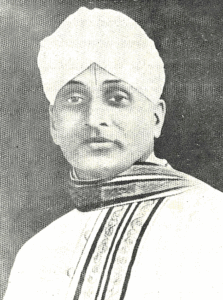
Vaidya Ratna Captain Dr. G. Srinivasa Murthy (1887–1962) Vaidya Ratna Captain Dr. G. Srinivasa Murthy (1887–1962)
Captain Dr. Gorur Srinivasa Murthy was a visionary physician, scholar, and reformer whose pioneering efforts laid the foundation for current scientific study of Indian systems of medicine. Born in Haltore village in Hassan District, he was an outstanding student who earned degrees in Arts, Medicine, Law, and Sanitary Engineering, winning the Chipperfield and Johnstone Gold Medals for general proficiency. Despite no formal training in Sanskrit, he delivered the Presidential Address of the All India Ayurvedic Congress (1924) in proficient Sanskrit. It was a proof to his erudition and devotion to India’s heritage.
After joining the State Medical Service in 1912 – where he served in various capacities – and serving as a Captain in the Indian Medical Service during World War I – where he offered his services in many military hospitals across India -, he combined discipline with deep compassion for healing. His collaboration with the Usman Committee, formed to recognize and encourage indigenous medical systems, led to his seminal work “The Science and Art of Indian Medicine”, which inspired the establishment of the School of Indian Medicine at Kilpauk in 1925, where he served as the first Principal and founded the Integral System – a system that integrate the strengths of both Ayurveda and Allopathy. As a dedicated teacher and institution-builder, he trained generations of practitioners. The School of Indian Medicine conferred him a Diploma in LIM (Licentiate in Indian Medicine) and a Post Graduate degree in Indian Medicine (HPIM – Higher Proficiency in Indian Medicine). A Theosophist influenced by Dr. Annie Besant, he later directed the Adyar Library (1934–1954), elevating it into a premier institution. After retirement, he founded IMPCOPS (Indian Medical Practitioners Co-operative Pharmacy & Stores) in 1944 to ensure the production of authentic Ayurvedic, Siddha, and Unani medicines under hygienic and standardized conditions, which carries his legacy even today.
Honoured with the title Vaidya Ratna during King’s Birthday Honors of 1932, Captain Murthy embodied purity, simplicity, and selfless service. His disciple Dr. V. Narayanaswamy founded this institute in 1963 to perpetuate his ideals. His life remains a shining example of dedication, leadership, and scholarship. We offer our respects to the memory of an extraordinary individual and a dedicated Karmayogi.
Institute history in brief
Captain Srinivasa Murthy Central Ayurveda Research Institute (CSMCARI), Chennai, traces its origin to 1963 when it was established as the Captain Srinivasa Murthy Drug Research Institute for Ayurveda (CSMDRIA) by Dr. V. Narayanaswamy, a student and colleague of Dr. G. Srinivasa Murthy, a legendary figure in Indian medicine. Supported by Dr. C. Dwarakanath, then Advisor (ISM), Ministry of Health, and with infrastructural assistance from Indian Medical Practitioners’ Co-operative Pharmacy and Stores Limited (IMPCOPS), the institute was inaugurated on 10 January 1963 by the Union Health Minister, Dr. Sushila Nayar. Initially functioning within IMPCOPS, the institute focused on research in phytochemistry and pharmacognosy under Dr. Narayanaswamy’s leadership, studying regionally significant medicinal plants. The Department of Biochemistry was added in 1967, marking the start of vigorous phytochemical studies that led to the development of Imbural tablets, an antitubercular and haemostatic formulation.
A standardization Unit for Ayurveda was established in 1970, leading to the standardisation of 446 formulations from the Ayurvedic Formulary of India. In 1972, the institute was brought under the Central Council for Research in Indian Medicine and Homoeopathy (now CCRAS). In 1974, a pharmacy for Ayurveda and Siddha preparations was added, and in 1977, the institute was affiliated with the University of Madras for Ph.D. research. Under Dr. K.K. Purushothaman’s leadership (1972–1988), the institute published over 150 research papers. To accommodate its growing research activities, the Tamil Nadu Government allotted two floors (9600 sq. ft.) in the Arignar Anna Hospital Campus, Chennai, where the institute was shifted in 1977.
Later, a separate land measuring 7200 sq. ft. was acquired for expansion on the recommendation of the Director of Indian Medicine, Government of Tamil Nadu. A new building was constructed on this land, and in 2013, the institute moved into its present premises within the Arignar Anna Government Hospital of Indian Medicine campus, Arumbakkam, Chennai.
The institute underwent several transformations. It was renamed as Captain Srinivasa Murthy Research Institute for Ayurveda and Siddha Drug Development (2009), later as Captain Srinivasa Murthy Regional Ayurveda Drug Development Institute (2017), and finally as Captain Srinivasa Murthy Central Ayurveda Research Institute (CSMCARI). Now functioning under the Ministry of Ayush, Government of India, the institute has six departments: Ayurveda, Pharmacology, Chemistry, Biochemistry, Microbiology, and Botany/ Pharmacognosy. The institute continues its legacy of six decades as a pioneering institute for Ayurvedic drug research and academic excellence.